Showing posts with label Action. Show all posts

Tuesday, February 8, 2022

Keeping the Light On


By Vicki Bechard

It’s February. The weather doesn’t know whether we are still in winter or trying to forge ahead to spring.  Even the groundhog wasn’t definitive.  But in my many years of teaching and coaching, February was always a challenging month.  Basketball was on the home stretch after a long season.  The last set of Parent-Teacher Conferences took place with the hope of righting some student ships so they could sail through to the end of the school year and reach their destination.   There are Valentine’s parties and snow days still to come.  Could spring break be too far away?

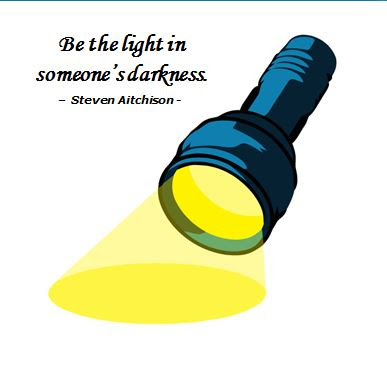
So maybe our light is dimming a bit as we await spring and all it portends:  new growth, longer days, outside recess, track, baseball, softball, State Assessments, and so much more.  How can we keep the light on as winter wanes and spring hasn’t yet arrived?  If we equate our light to a metaphoric flashlight, we might find some interesting solutions to our problem of dimming light.  And these solutions just aren’t for faculty and staff, they are also something our students might benefit from too.

Depending on the size and type of our flashlight and the amount of light needed, the possible solutions will vary.  Most of the time we just need new batteries – not a whole new flashlight.  Occasionally our bulb is burned out, but generally, checking the batteries is our first step toward restoring our light. Consider these battery possibilities: 

A Attention - How do we give someone attention?  Stop by their room; sit with them at lunch; call, text, listen, inquire about how they are; ask about life outside school; (did I mention listen?); spend time with them; call them by name; make eye contact; show up; respond promptly.  Find a way to ensure they know they matter so that their light never goes out. 

AAAttention + AffectionAffection means we care and gives depth to the attention.  How can we show appropriate affection at school? Proximity; A pat on the back or high five; a warm smile (be sure to smile with your eyes if you are masked!); A note of encouragement, appreciation or thanks; A hug if appropriate and always with permission (realizing that violates the idea of maintaining proper distancing but is sometimes necessary).  Affirmation might be another way to show affection especially in a school setting. We affirm a person is worthy by giving them our undivided attention and demonstrating that we care. These are important ways to keeping the light burning brightly.          

AAA - Attention + Affection + Acceptance  - Acceptance is something everyone seeks. Take the time to get to know the other person; Agree to disagree; Show respect for them as individuals, for their decisions, for their ideas… Invite them in… to a conversation, to a group, to a learning opportunity, to share a laugh.  When one feels accepted they feel like they matter, and their light burns long into the night.

CCompassion - Compassion is more than sympathy.  It is caring in action. How do we show compassion to or for others?  Be Kind; Encourage or positively reinforce; Show empathy for another’s situation; Notice other’s troubles or frustrations; Offer to help or support; Be emotionally moved by their circumstances and help them seek relief; Judge less; Work for the greater good. When someone is experiencing darkness, share your light and be the one who helps them find their light.

DDirection – Finding our way out of the darkness is challenging without a light.  How do we offer direction without telling them what to do?  Shine your light to navigate the darkness:  Guide, Suggest; Ask questions; Offer options; Help identify or define the goal; Encourage and reinforce; Provide feedback; Allow for/create space and time. Sometimes a person’s light is just hidden and they must rediscover their purpose in order for the light to go from dim to bright again.

 ************* 

The purpose of the flashlight metaphor is to get you to think about how really simple it is to look out for each other if we are intentional.  We must notice those around us (and how we are feeling too) and not be hesitant to act.  When you shine your light for others, it also lights your way; conversely if you shine your own light, it can light the way for others too. 

But there are other ways to keep ourselves energized and our light burning brightly.  If we purposely continue to grow and learn new things, it keeps our mind engaged and focused on new possibilities.  What book or article can you read that gives you new ideas?  What professional learning experience can you attend (virtually or in person)? What podcast inspires you? What colleague can you observe? What conversation can you have?  Some schools are even scheduling mental health days for everyone.  We are living in different times and we must think of new ways of responding to the challenges and feelings that dim our light.  We think we don’t have time, but if our flashlight isn’t working we continue to languish in the darkness.  When we can’t see the light we cannot be productive. I admit I don’t stay at Motel 6, but I do like their commercial slogan, “We’ll leave the light on for you.”  What an inviting way to look at the culture in our buildings.  Are you ensuring that there is a light on for everyone to use?

Seek the light.  Share the light.  Be the light.


Pro Tip:  Sometimes even changing the batteries or learning new things doesn’t work

     When that happens, sit with them quietly in their darkness and share your light.


Wednesday, August 29, 2018

Mindset Matters: A Prescription for a Great Year!

by Vicki Bechard
LFKS Secretary


It’s Back to School!  How do you feel?  Are you excited?  …Do you have great plans?  …Big hopes and dreams for you and your students?  Will you still feel this way in October? December? Next Spring?  Maybe it's time for a back-to-school mindset checkup.  

Is your mindset radiating excitement and confidence for new ways to teach and learn, new possibilities, and success for all?  Is it clouded by questions, doubt, and apprehension for the changes and new expectations for educators and students alike?  Is it a little bit of both?  All responses are normal, but some are more constructive than others.  Is your mindset propelling you to great things or holding you back?  What will be your prescription for success?

Variations of this quote have floated around social media this week that might make us consider the health of our educational mindset: 

“A goal should scare you a little and excite you a lot.” 
- Dr. Joe Vitale

What is your first response to that statement?  Whatever you say, that is your mindset talking.  That first reaction – knee jerk if you will – says a lot of about how you think.  The beliefs we hold, based on the experiences we’ve had, reveal themselves in the way we respond to every task, challenge, decision, or problem we encounter every day.  If we are interested or believe we can succeed, even though we may need to learn something new, our approach is viewed as a growth mindset.  However, if we believe we are being asked to go too far out of our comfort zones, that we might look bad, believe it is too difficult, or we had a similarly bad experience, then we exhibit a fixed mindset.   Mindsets are usually viewed as a continuum, rather than either/or.  We all display a range of mindsets depending on the situation. So as you examine your own beliefs and practices, what symptoms do you have?  In other words, which mindset do you exhibit more often?  And does it matter for the health of teaching and learning?

How does the mindset with which we approach everyday life, including teaching and learning, impact our potential for success?  …Or our students’ success?

With redesign of education at the forefront of our planning and focus of back-to-school professional learning, educators are being forced to reckon with many new tasks and challenges.  Thinking outside the box is a requirement of redesign and yet can produce both open doors of opportunity and possibility, and walls of self-preservation and resistance.  How do we shift our thinking to increase chances of success?  What new strategies will we try to improve our teaching and learning health?

If we want our students to exhibit a growth mindset, it begins with us – the adults.  Saying you have a growth mindset isn’t enough.  It’s about walking your talk; aligning your actions with your goals; and sending the right message for yourself and your students.  Just like we can often tell if our kids are faking it; kids can tell if we are faking it too.

Change Your Words, Change Your Mindset
Developing and nurturing a growth mindset begins by reframing your thinking and intentionally changing your words to change your mindset.  It begins with the ALL of the adults in the building and spreads to students through our instruction and modeling of the beliefs, words, and actions that represent a growth mindset.  It is a commitment, not a quick fix.  It is not something you achieve, like a test score or grade, but something you strive to live every day.  It requires a conscious effort to ensure our thinking, speaking, and actions line up with our intent.  It’s also more than a bulletin board or school slogan. It requires us to examine the work we give students, the class rules we post, the way we respond when feedback is given or an intervention is needed.  What message(s) do we send?   It is an intentional way of approaching every task, problem, or situation every day.  For some, the prescription may be a lifestyle change.

So What’s the Prognosis?  
Whatever mindset we have, we can change. Growth Mindset is more than a positive outlook or increased effort, although that is part of it.  It is a willingness to work through difficulties, plan for and deal with failures that we will most likely incur, and a resolve to focus on possible solutions rather than the problem itself.  This occurs in classrooms, faculty rooms, professional learning, accreditation and redesign efforts, as well as how we approach post-secondary success.  It starts early with kindergarten readiness.  Our mindsets are shaped by our experiences and it is up to all educators to ensure we are nurturing and guiding our students in the right direction so they can develop mindsets that lead them to be successful in school and as adults.

Even those with a growth mindset can slip back into a fixed mindset when faced with multiple setbacks, lack of support or resources, or mental/physical exhaustion.  Nurturing a growth mindset is always a work in progress. 

What We Understand
We evolve through our experiences and willingness to try or be open to new things.  We believe we can learn and grow with new understandings, practice, and a commitment to continuous improvement.  We have confidence in our ability to control of our circumstances.  We embrace possibilities and persevere through obstacles and setbacks.  We are committed to the message of hope that Dr. Carol Dweck shares in this video, The Power of Yet.   

Our prescription for a great school year, fueled by a growth mindset, is to be consciously aware of our thinking, words and actions.  Are they aligned with what we say we believe or expect?  Are we modeling and working to fulfill the Power of Yet?  What learning, feedback and support should we see in our buildings to ensure this is happening?  The side effects of a growth mindset prescription just might be the best teaching and learning you’ve ever experienced!

Doctor's Note:  Check back in 3 months so we can monitor our progress!


References:
"The Power of Yet" by Dr. Carol Dweck
Brock & Hundley, The Growth Mindset Playbook
Mike Gershon, How to Develop Growth Mindsets in the Classroom


Thursday, September 14, 2017

Rise and Shine! The Possibilities of Every Sunrise

By Vicki Bechard, Secretary LFKS


Rise and Shine!  As the sun rises on a new school year, there are so many possibilities for kids, for the educators who teach them, and the communities that nurture them.  Every sunrise represents hope for the future as we turn the page on a new school year or a new day.  Every sunrise gives us a reason to be inspired to learn, grow, and excel.  The very words of Rise and Shine energize us to get moving and be at our best!

But to give life and value to these hopes and possibilities, we must take action.  Our inspiration must involve more than talking.  It must involve doing.  So we plan, learn and grow, but then we must act.  What are you doing with this school year’s sunrise?  How are you creating a better future for you as a teacher by growing your craft?  In what ways are you seeking to cultivate relationships with students, colleagues, or parents; improve your instruction; and ultimately facilitate student success?  What inspires you?  Who will you inspire?  How will you shine a light on possibilities and turn problems into meaningful challenges?  The answers to these questions involve action, and as a rooster crowing suggests (or when my mom used to whisper this bit of encouragement in my sleeping ear), it is time to Rise and Shine!

A school year is filled with many sunrises for you and your students.  These are opportunities to reflect on previous practice, learn from our mistakes, and make each endeavor better than our last attempt.  Each day is an opportunity to create the best learning experiences for our students, taking our own knowledge and skills and implementing them in meaningful ways.  In order to do that, we must continue to be learners, refining our practice while expanding our understanding of best practices, as we prepare students for an ever changing world.  What new learning will you pursue?  What feedback will you seek? How will you get out of your own comfort zone to embody a growth mindset and practice and model the Habits of Mind on a daily basis?

The sunrise for Kansas schools is also one of hope and promise.  The new accreditation system is focused on looking forward, improvement, and most of all student success.  The inspiration that comes from working within a culture of growth and a system of 21st Century learning will lead Kansas educators to attain even more successes than we have experienced in the past.  Good is the enemy of great and it is imperative that we continue to take advantage of the opportunities that exist with every sunrise to make our classroom, building, and district better than it was the day before.

“Good is the enemy of great. And that is one of the key reasons why we have so little that becomes great. We don't have great schools, principally because we have good schools. We don't have great government, principally because we have good government. Few people attain great lives, in large part because it is just so easy to settle for a good life.”                                 
                                                              - Jim Collins, Good to Great (2001)

We at LFKS hope that each sunrise inspires you to learn and grow to become great.  How can we support your professional learning journey?  We have resources and learning opportunities available for your use and participation.  We are excited to walk this journey with you and connect you with others who share your passion, common characteristics, or goals.  There are many examples of greatness happening in classrooms and buildings across our state as we work to improve results through effective professional learning.  We have included some of these examples in the first two videos in our series “Inspired to Learn:  Kansas Stories,” and are continuing this mission with the next videos that will address HOW effective professional learning is accomplished.  Look for our third video later this fall. 


Great educators aren’t born, they are created, supported, and continue to evolve.  Education is indeed a journey not a destination, and it begins anew each school year and each day with a sunrise that shines a light on the possibilities that exist. We owe that to ourselves and to our students. Let’s Rise and Shine together so we can be great Every. Single. Day.